
Using servo motors with Microbit
English version at the end.
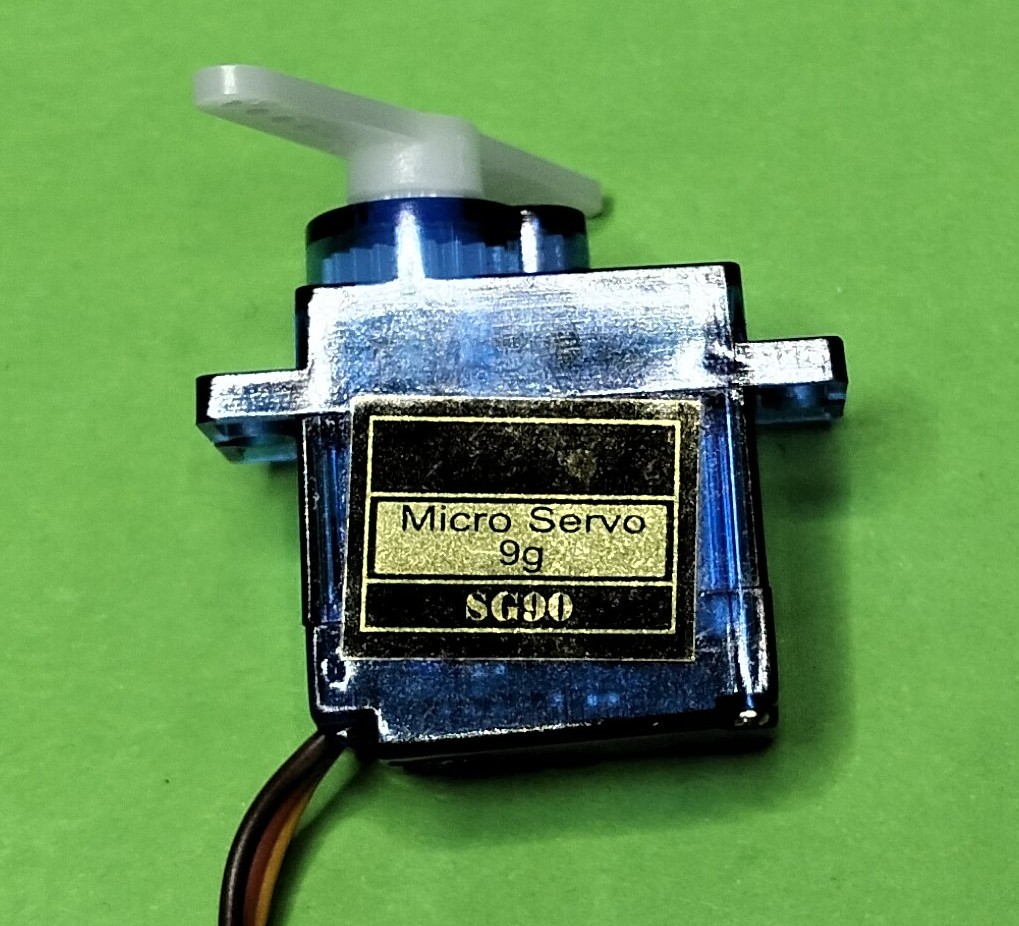
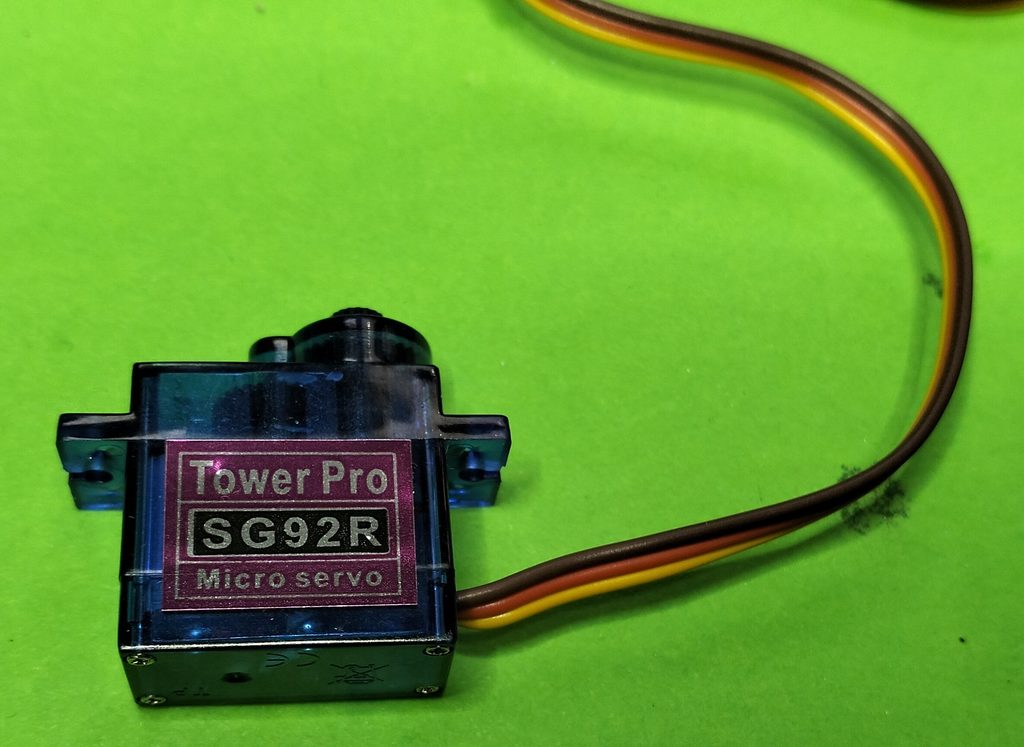
Cuando nos referimos a los servos, estamos hablando de servomotores. Los que usamos en educación tienen muy poca potencia y son muy económicos. Los normales son de 9 gramos (su peso son 9g) y engranajes de nylon por menos de 2€. De ahí para arriba. Los hay de engranajes de metal, que son mejores y tienen más fuerza, pero aumentan su precio (sobre los 8€).
También hay que tener en cuenta su ángulo de giro. Mucho de ellos no sobrepasan los 180º de giro, pero los hay de 360º, con lo que hay que tenerlo en cuenta a la hora de comprarlos.
Los usamos para automatismos de apertura de puertas, subir ventanas, correr toldos, movimiento de personajes, etc. En cualquier momento que necesitemos realizar un novimiento, sea activado por un sensor o no.
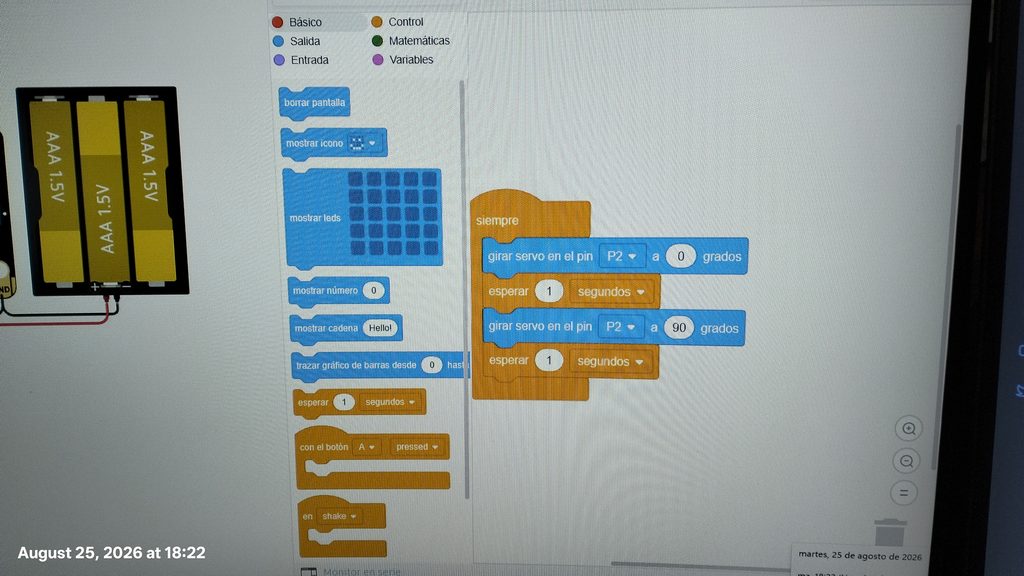
Para usarlo con la Microbit, hay que abrir el Makecode y añadir la extensión de servos para que nos salgan en la programación la extensión de servos.
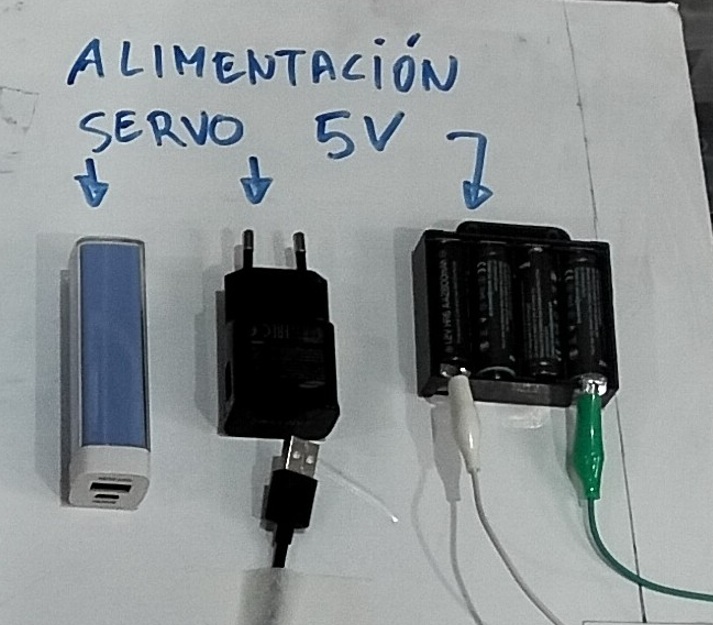
Los servos no pueden alimentarse con los 5 voltios que vienen de la Microbit, por lo que necesitan electricidad exterior mediante pilas (recomendable 6v, 4 pilas de 1.5v), una powerbank o un cable USB modificado para coger solo electricidad (se le corta el extremo y se anulas 2 de los 4 cables)
Este sería el esquema de montaje en un dibujo y su programación básica.

En la foto que vemos a continuación, apreciamos los 3 sistemas de alimentación del servo en la esquina superior derecha, powerbank, USB (conectado a la red eléctrica o a un ordenador) y mediante pilas. Vemos siempre que salgan el cable VCC (Voltaje de Corriente Continua) y el cable GND (Ground o toma de tierra).
In the photo below, we can see the servo’s three power supply systems in the upper right corner: power bank, USB (connected to the mains or a computer), and batteries. We always see the VCC (Direct Current Voltage) and GND (Ground) wires coming out.
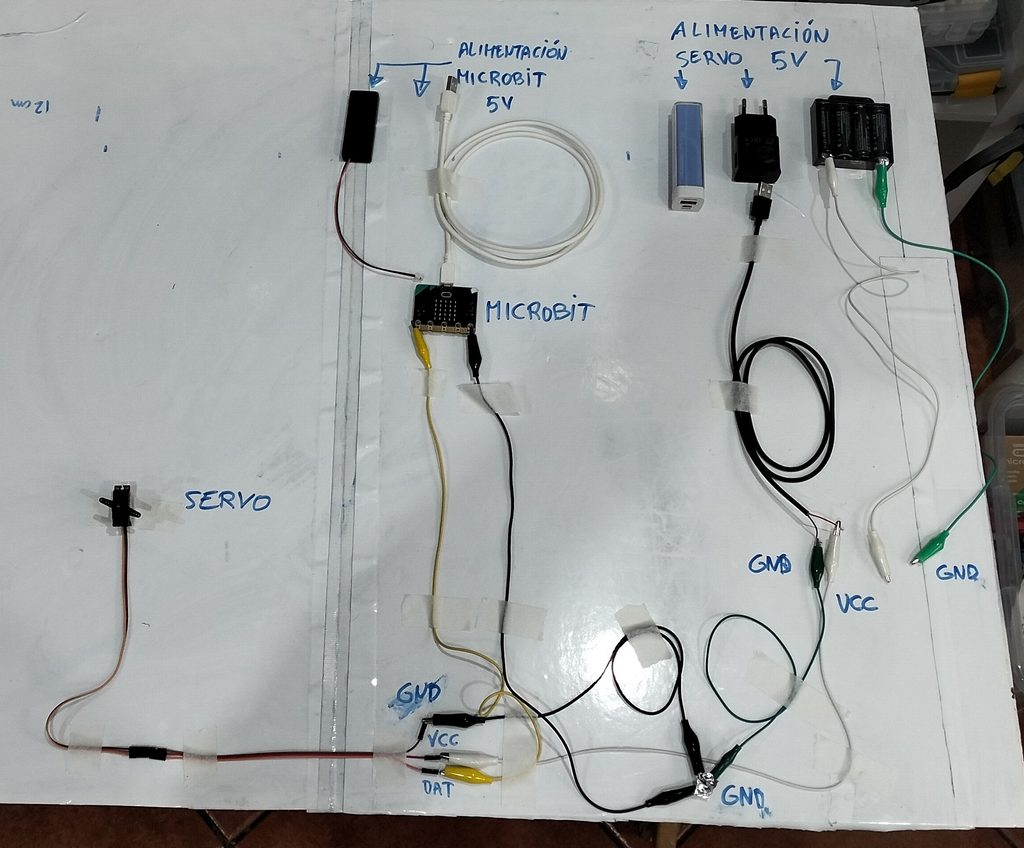
La placa Microbit tiene su propia alimentación desde el ordenador, pilas u otra powerbank. Vemos que de la Microbit (pin 1 en el vídeo) sale el cable amarillo que lleva la programación (DAT) al servo, para que sepa lo que tiene que hacer.
The Microbit board is powered by its own power source, either from the computer, batteries, or another power bank. We can see that the yellow wire carrying the programming (DAT) data comes out of the Microbit (pin 1 in the video) and goes to the servo, so it knows what to do.
English
When we refer to servos, we’re talking about servomotors. The ones we use in education have very low power and are very inexpensive. Standard servos weigh 9 grams and have nylon gears for less than €2. Prices go up from there. There are also servos with metal gears, which are better and more powerful, but they are more expensive (around €8).
You also have to consider their rotation angle. Many don’t exceed 180º, but there are 360º ones, so you have to keep that in mind when buying them.
We use them for automating door openings, raising windows, extending awnings, moving characters, etc. Any time we need to perform a movement, whether activated by a sensor or not.
To use them with the Micro:bit, you have to open MakeCode and add the servo extension so that the servo extension appears in the program.
The servos cannot be powered by the 5 volts coming from the Microbit, so they need external power via batteries (6v recommended, 4 x 1.5v batteries), a power bank, or a USB cable modified to only draw power (cut off the end and disable 2 of the 4 wires).